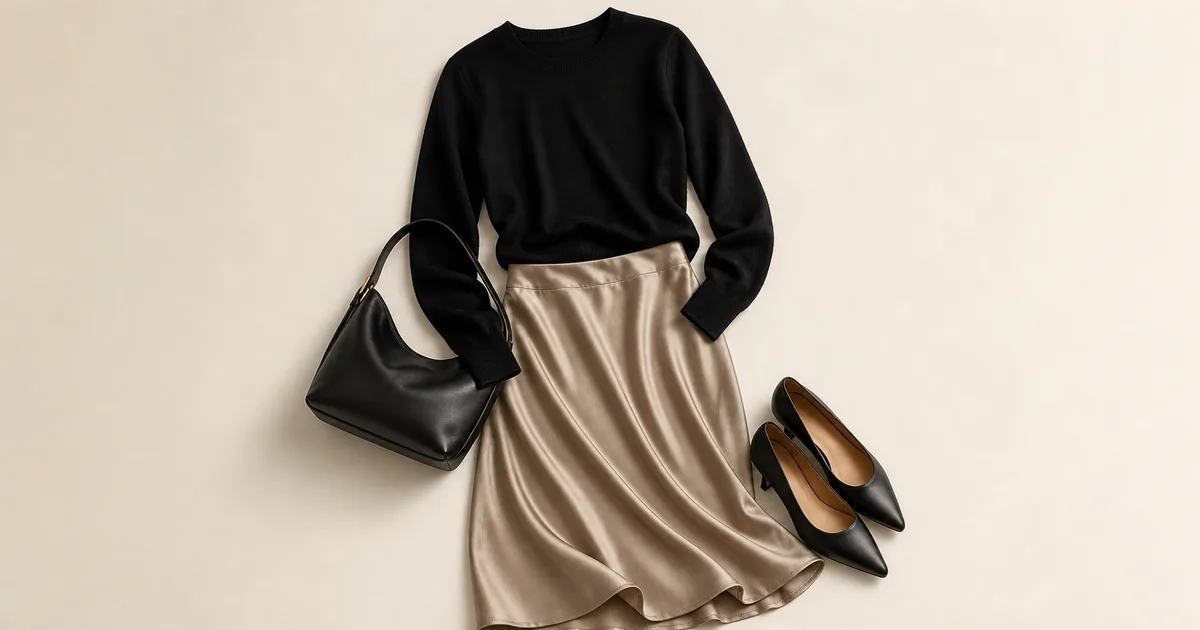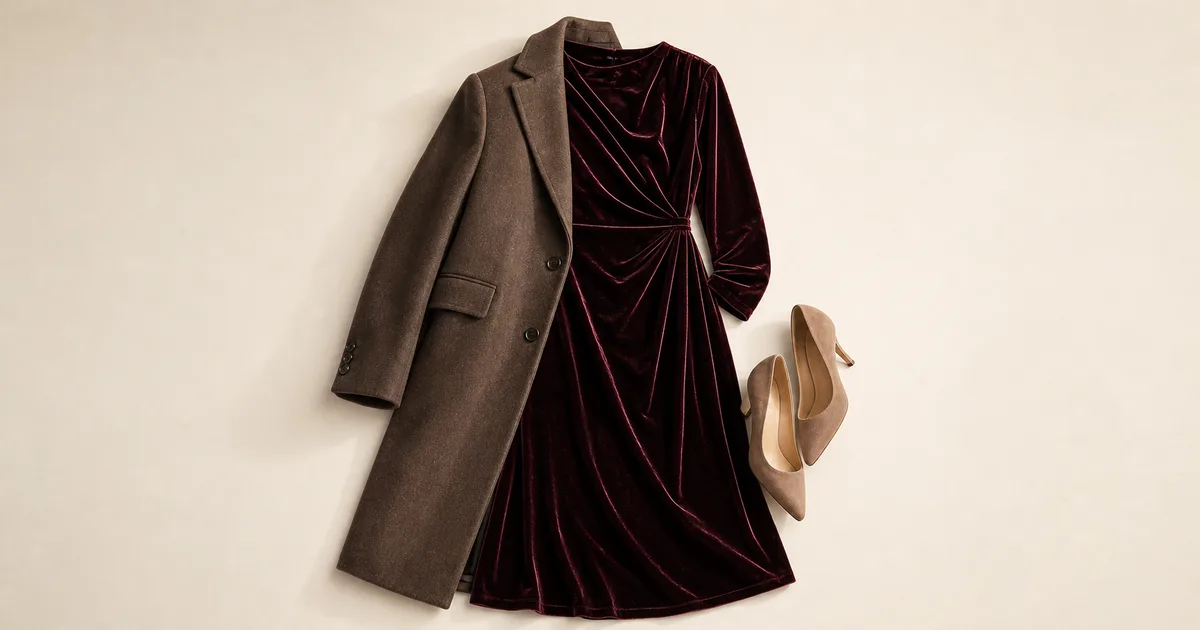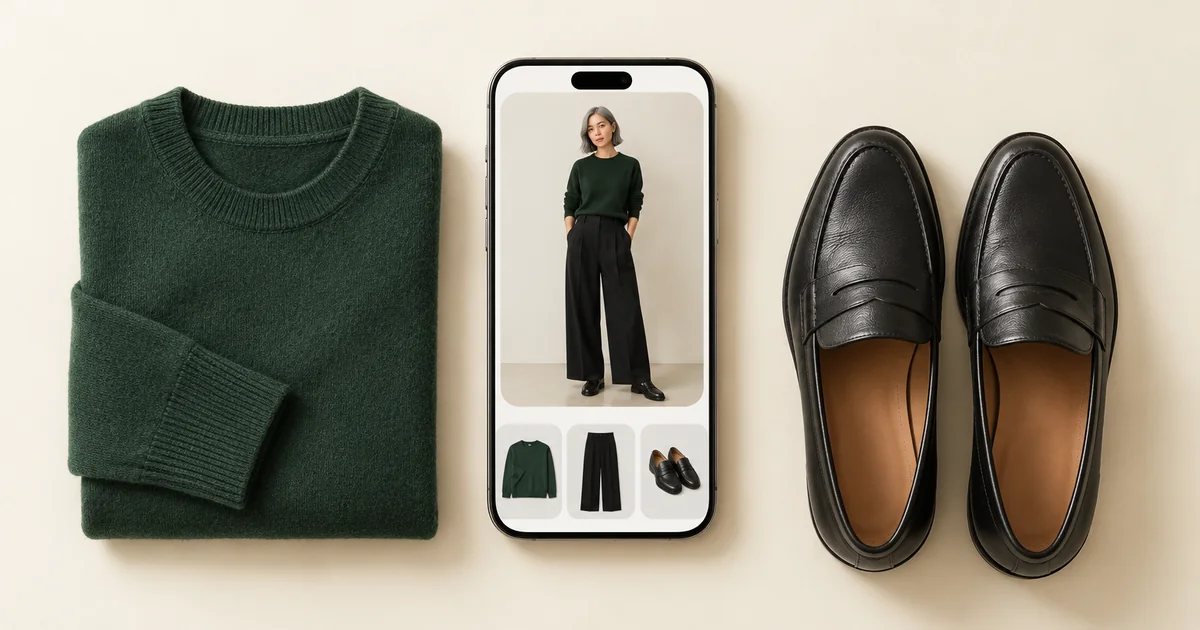

Winter layering outfits should begin with the real plan. What to wear for cold winter weather depends on the day more than a universal list of must-have clothes. Start with warmth, indoor transitions, movement, coat capacity, and keeping each layer easy to remove. The five combinations below differ in warmth and bulk, and each adapts to your own style, shape, budget and wardrobe.
The right number of layers depends on the day, so start from the forecast, not the month. We make Wdrobe, an app where you can pick a day and get an outfit from your clothes for its weather.
Turn the forecast into layers
For cold winter weather, separate requirements from expectations. Note how long you will be outside, how much you will be moving, what the temperature will do, and whether you are indoors for long stretches. Where you are unsure, start from a silhouette you know rather than a new one.
Build the cold winter weather outfit base first, then add shoes, weather protection, and the bag you will actually carry. Accessories here should earn their place on warmth or function, not on decoration.
5 practical outfit formulas
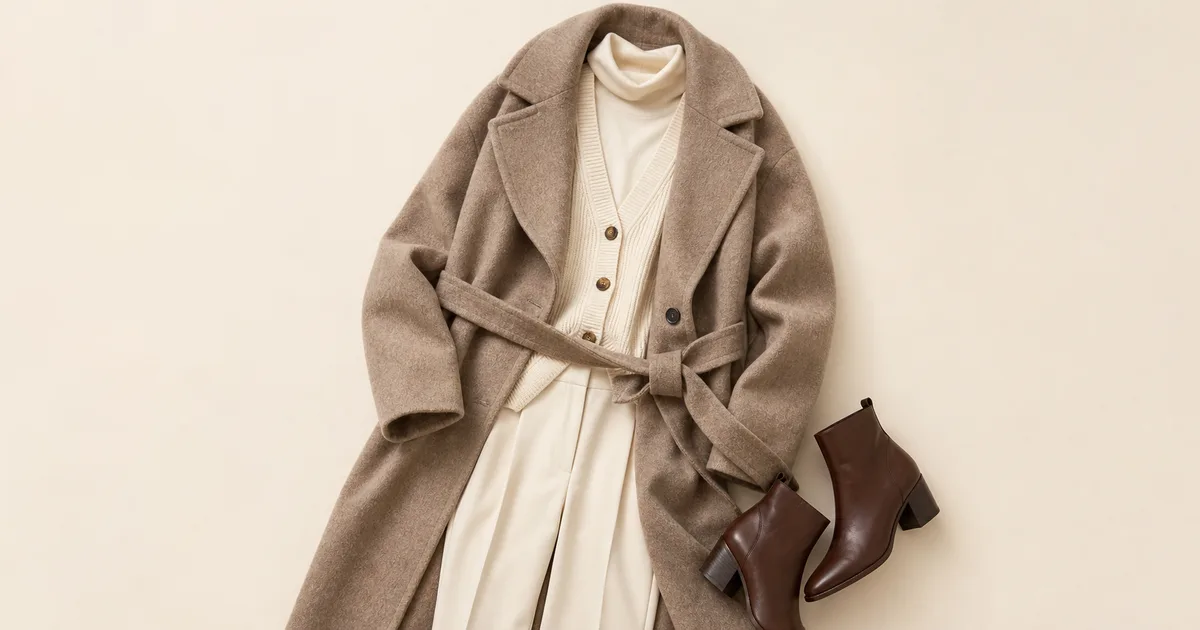
1. Fine base + cardigan + belted wool coat
This is the simplest baseline for cold winter weather. In fine base + cardigan + belted wool coat, the base sets the warmth and the outer piece decides how long you can stay out. Keep the outer layer plain, then sit, walk and reach to check nothing binds.
2. Fitted knit + blazer + long overcoat
Use fitted knit + blazer + long overcoat when you need more warmth without more bulk. The structured layer holds the softer one in shape, and the footwear keeps it usable outdoors. Check the layers stay where they should while you move, not just facing the mirror.
Four layers is where warm stops and bulky starts. Where exactly depends on your specific pieces. See where yours tips over.
3. Thermal layer + shirt + cropped puffer
With thermal layer + shirt + cropped puffer, proportion is the point, and the puffer is the piece that decides it. Decide the tuck or the waist, then photograph the whole thing with the coat and shoes. If it feels off, adjust one length or volume at a time rather than adding another layer.
4. Knit dress + long cardigan + structured coat
Choose knit dress + long cardigan + structured coat for adaptable layering. Each outer layer must fit over the one beneath without pulling, and come off without a struggle. Carry one color or texture across two layers to connect them, without every piece demanding attention.
5. Turtleneck + overshirt + weatherproof parka
Treat turtleneck + overshirt + weatherproof parka as the version for the coldest days. This only works when every layer, plus the bag and the shoes, is part of one plan. Wear proven shoes and save a variation for wind or a heated indoor destination, not for a vague fear that anything could change.
Check comfort and formality together
Wear the complete cold winter weather outfit for at least ten minutes. Sit, walk, raise your arms, use the pockets and carry what you normally carry. Check nothing is sheer, that closures work with gloves on, and that the shoes are already proven. Layers that need constant adjusting are not working.
Formality for cold winter weather comes from the whole combination. Fabric condition, a deliberate hem, clean shoes and the right outer layer matter more than adding accessories. If it looks too casual, sharpen one piece. If it looks too formal, soften one piece and compare.
Prepare one realistic backup
For cold winter weather, the useful backup addresses wind or a heated indoor destination. Usually that is one layer you can remove, a shoe that handles wet ground, or a spare option. Avoid carrying a second set of layers for weather that is unlikely.
For more adaptable cold winter weather combinations, continue with this related outfit guide. Wear the final combination with the real coat and bag once, then save it so it is decided.
Planning ahead? Wdrobe's outfit planner puts a week of outfits from your own clothes on a calendar and checks them against the forecast.
Frequently asked questions
How do you layer in winter without looking bulky?
Keep the layer closest to your body thin, add structure in the middle, and let the outer layer be the only loose piece. Bulk comes from stacking two thick items.
How do you keep a waistline when layering?
Belt the outer layer, or choose a mid layer that ends at the hip so the shape is not lost. Adding a defined line anywhere stops the outfit reading as one block.
What is the warmest thin layer?
Fine merino or silk as a base. Both insulate at a thickness that disappears under everything else, which is what makes real layering possible.
Layering is decided by what actually closes over what, not by the theory. The seasonal version of this is moving a wardrobe between seasons.
A layered outfit fails in the mirror far more often than on paper, usually because the outer piece was never going to close over the middle one. Check the whole stack on yourself first.