
What to wear for work from home depends on the day more than a universal list of essential clothes. Start with camera framing, room temperature, comfort while sitting, and a clear transition into the workday. The five formulas below offer different levels of polish and protection while remaining broad enough to adapt to your style, body, budget, and existing wardrobe.
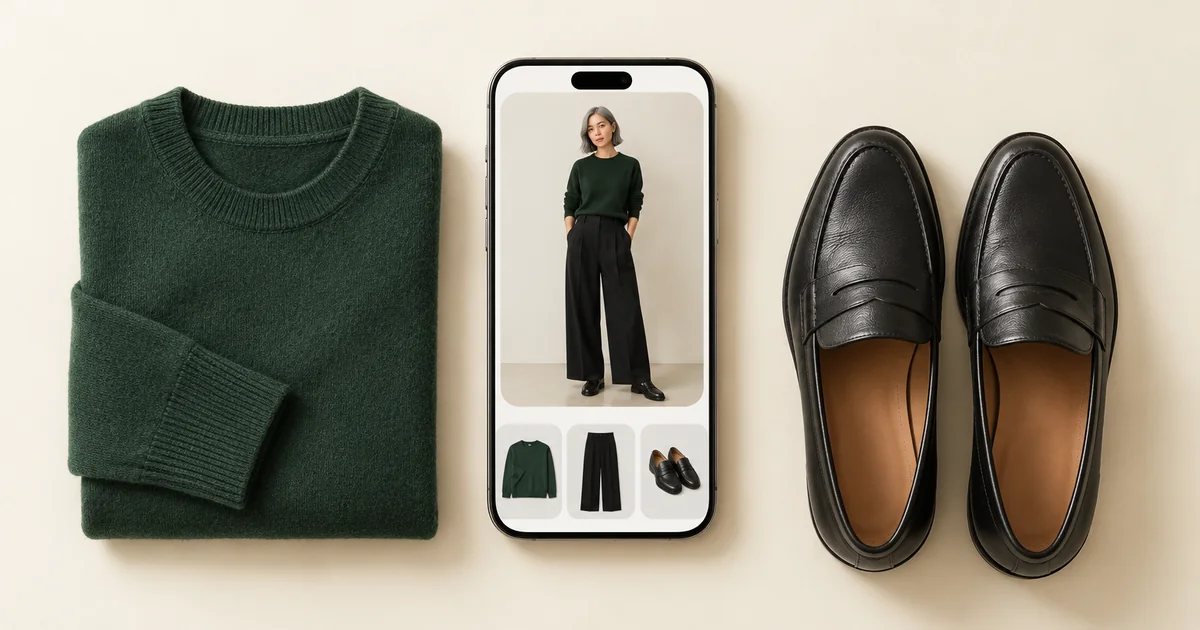
Camera framing means the neckline does most of the work, and which shape flatters you depends on your build. From one full-body photo, Wdrobe, an app we make, can suggest necklines that suit your shape.
Translate the plan into clothing needs
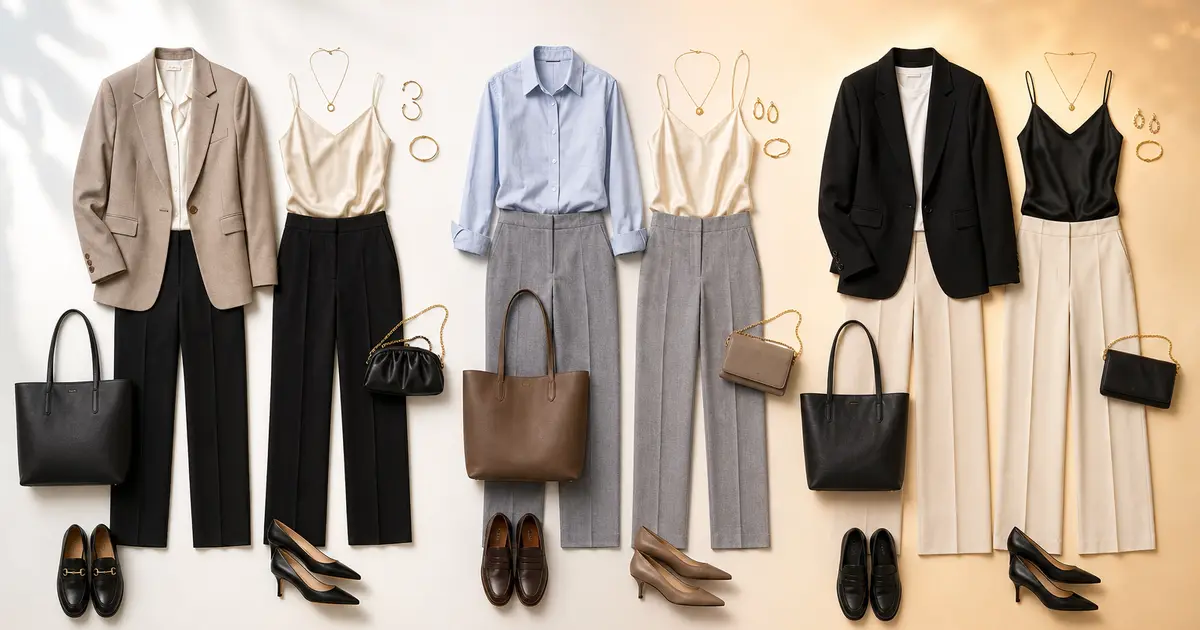
For work from home, separate requirements from expectations. Write down how long you will wear the outfit, how much you will walk or sit, what the weather may do, and the most specific dress-code clue available. Choose a familiar silhouette one step more polished when the guidance is unclear.
Most home days need only two levels: a camera level for the top half, and a step-outside level for the school run or a coffee. Plan the top for the first and the shoes and layer for the second. One accessory, such as earrings that show on screen, is usually enough.
5 practical outfit formulas
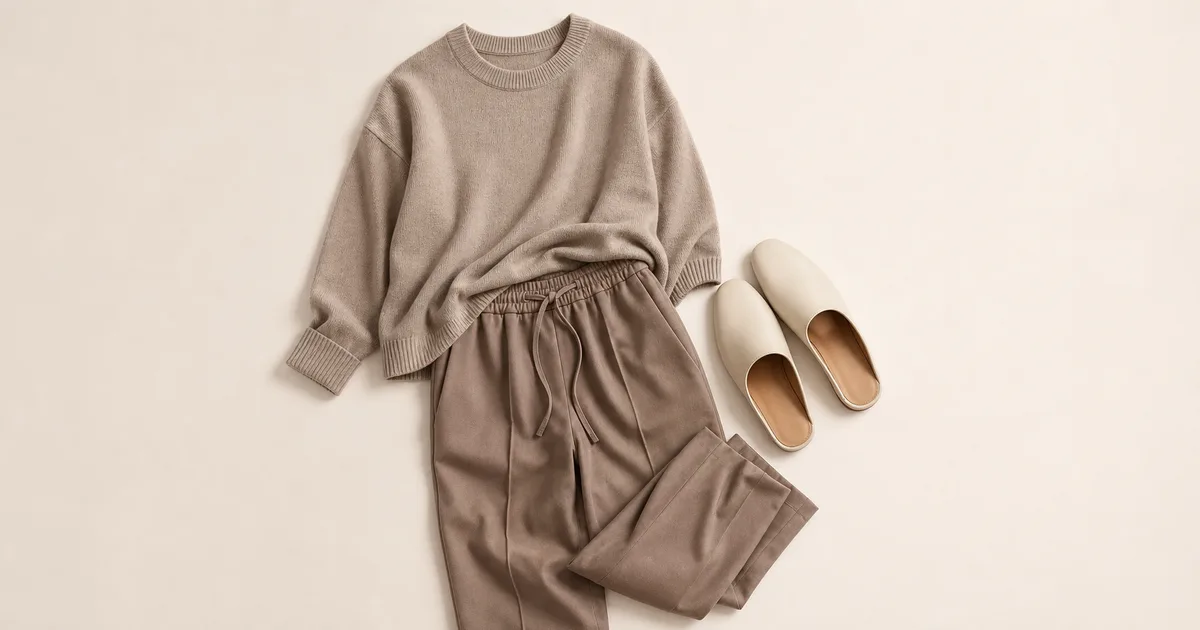
1. Soft knit + pull-on tailored pants + clean house shoe
The simplest baseline. A merino or cotton crew-neck in a solid mid-tone shows well on camera, and pull-on trousers with a flat front look tailored without a zip or a belt to sit on all day. A clean pair of slippers or loafer-style house shoes means you can answer the door without changing.
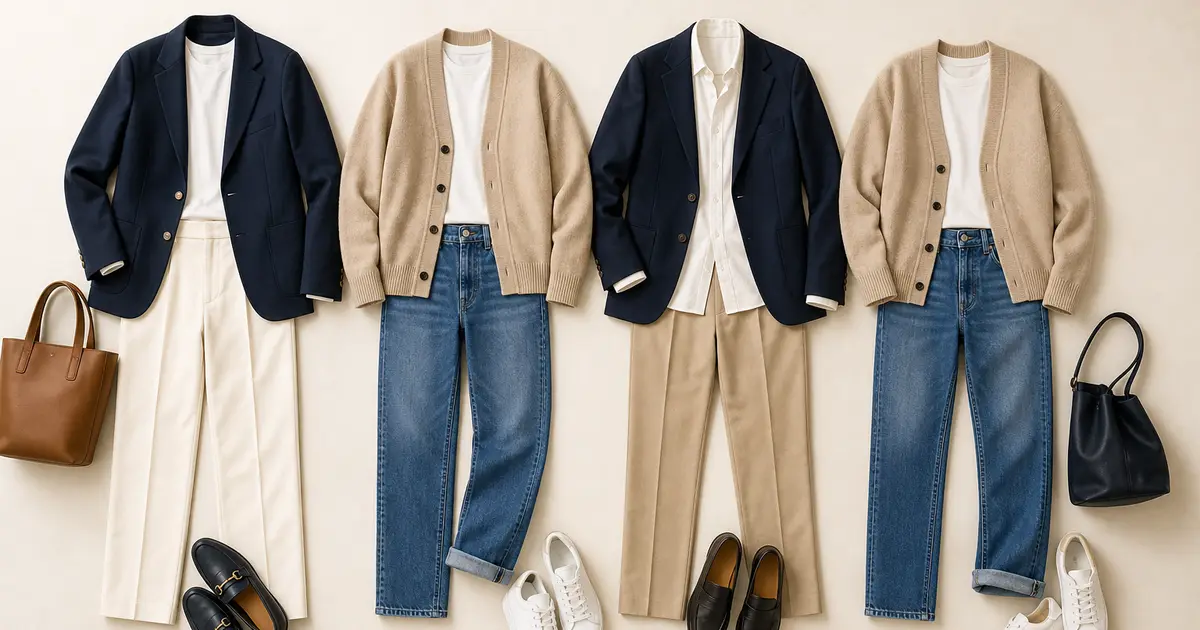
2. Collared shirt + dark stretch jeans + cardigan
For a day with client calls. A collar reads as work on a small video square in a way a tee does not, and dark stretch jeans are comfortable for eight hours of sitting. The cardigan handles a cold room and comes off for the call if the shirt looks sharper alone.
The bar is low and that is the trap. Something that works on camera and still feels comfortable is a narrower set than it looks. Work out your on-camera set.
3. Matching knit set + structured overshirt
A matching knit top and trousers feel like loungewear and look like one plan, especially in grey, oatmeal or navy. A cotton or wool overshirt on top gives the outfit a shoulder line on camera and works as a jacket if you go out at lunch.
4. Fitted tee + midi skirt + light sweater
For warmer days, or for anyone who finds a waistband uncomfortable after lunch. A knitted or jersey midi skirt with a fitted tee is as comfortable as joggers, and a light sweater over the shoulders covers the camera when the room is cold.
5. Fine sweatshirt + straight pants + small earrings
The relaxed day. A fine-gauge sweatshirt in a smooth fabric looks neater on screen than a fleece hoodie, and small earrings or a thin chain are what make it read as dressed. Straight trousers rather than joggers mean you can leave the house without changing.
Check comfort and formality together
Open the camera on your laptop and look at the top half in the light you work in. Then sit in your desk chair for half an hour. A waistband that digs in, a neckline that slips or a knit that itches will show by then, and an outfit that needs fixing all day is not a home outfit.
Formality for work from home comes from the whole combination. Fabric condition, intentional hems, clean footwear, and a suitable layer often matter more than adding jewelry or wearing dark colors. If the result feels too casual, sharpen one element. If it feels too formal, soften one element and compare again.
Prepare one realistic backup
For work from home, the useful backup addresses a surprise video call or a quick trip outside. It may be one removable layer, a weather-safe shoe, or a saved alternate outfit when travel is involved. Avoid packing a second wardrobe for possibilities that are unlikely to happen.
If you find you wear the same two of these every week, that is the start of a personal style uniform, which takes the decision out of the morning altogether.
Want outfits like these from clothes you already own? Wdrobe's AI stylist builds them from your wardrobe and shows each one on your photo.
Frequently asked questions
What should you wear working from home?
Something with structure on top, since that is what appears on camera, and genuinely comfortable below. A knit or shirt with soft trousers reads as put together without costing you comfort.
Does getting dressed for remote work actually help?
For most people yes, because changing clothes marks the start of the working day. The effect comes from the transition rather than from formality.
What should you avoid wearing on video calls?
Tight stripes and small busy patterns, which shimmer on camera, and anything close to your wall colour. Solid mid-tones read most clearly.
The same thinking applies to everything else in your closet. See how to make more outfits from the clothes you already own.
These outfits are judged by the camera and by how they feel after six hours sitting down, which are two different tests. Save the few that pass both.