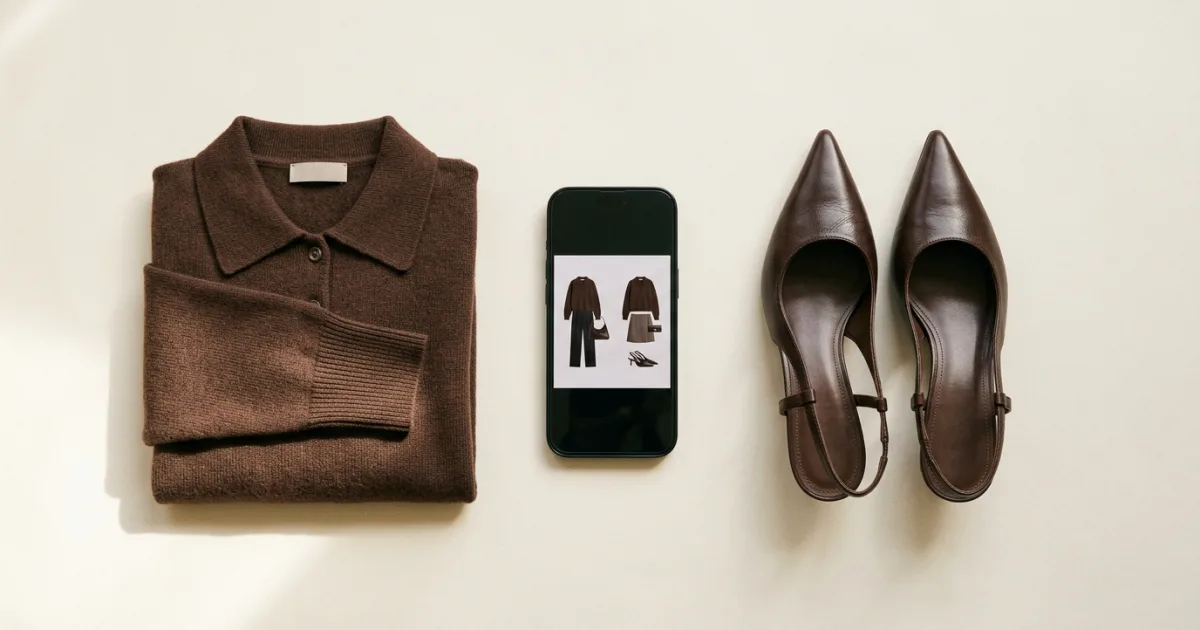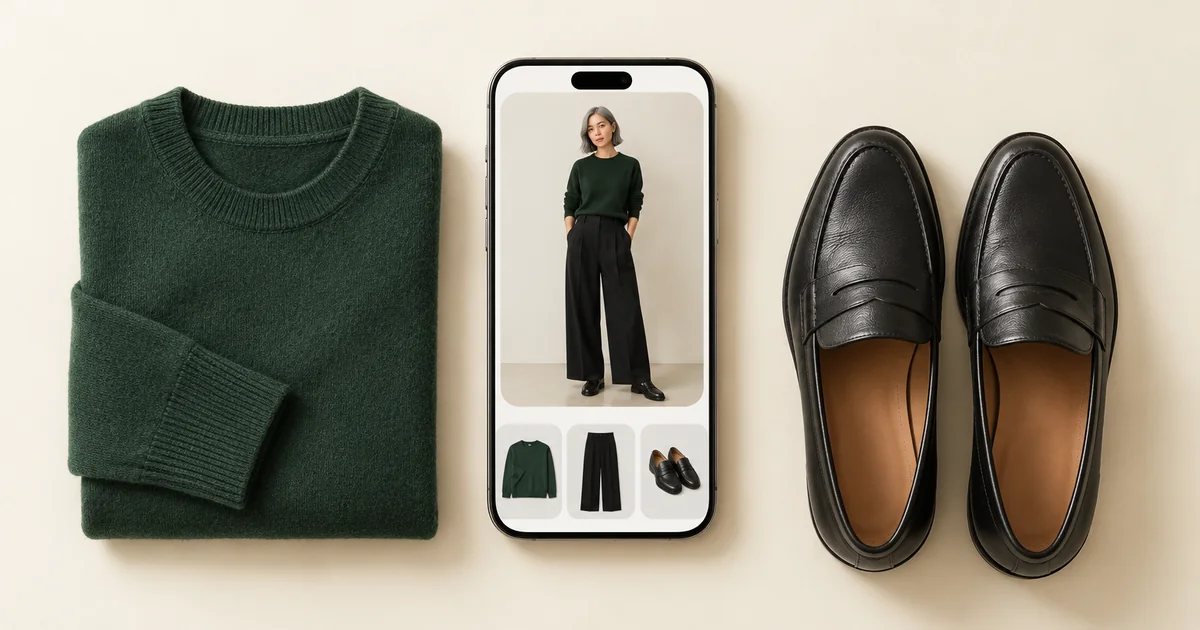


A useful wardrobe wishlist lists missing jobs, not products. Each line names the gap, the outfits it would complete, the measurements and fabric it needs, and the date it was added, and a short monthly review deletes whatever you no longer want.
A purchase brief gets sharper once you have seen the piece on yourself rather than on a model. Our wardrobe app, Wdrobe, can preview a shop screenshot on yourself before it goes on your list.
What a wishlist is for
Most wishlists are saved screenshots: things that looked good on someone else on a Sunday evening. A useful one works the other way round. It starts from a problem you had while getting dressed, such as nothing warm enough for the walk to work or no shoes that go with the green dress, and only then looks for a product.
That difference decides what you buy. A list of products leads to more of what you already like. A list of gaps leads to the piece that makes the rest of the wardrobe work, which is often less exciting and worn far more.
A five-step method
1. Write the gap, not the product
"Something warm for a cycling commute" is a gap; "a nice coat" is not. Write the gap the moment you notice it, while you are standing at the wardrobe, because by the weekend you will remember only that you wanted a coat. If you are not sure where your gaps are, this guide to finding wardrobe gaps has a simple method.
2. Tie each line to three outfits
Next to the gap, write three outfits it would complete from clothes you own. If you can only name one, the piece will be worn once. If two of the three need something else you do not own, the real count is one.
A wishlist is worth having because it stops you buying the fifth version of something. That only works if you can see the other four. Build the list against what you own.
3. Write the brief before you browse
Add colour, fabric, care and measurements before you open a shop. Measure a piece you already own that fits well and use those numbers. With the brief written, a product page either matches or it does not, and the "nearly right" pieces that cause most returns are easy to skip.
4. Date every line
Put the date next to each item. Something you still want after three or four weeks is probably a real gap. Something you have forgotten about was a mood, and the list has done its job by holding it until the mood passed. The same pause is the core of how to stop impulse clothes shopping.
5. A ten-minute monthly review
Once a month, delete anything solved, anything you no longer want, and anything that turned out to duplicate something you own. Move the top line, the gap that annoyed you most this month, to the front. That is the only thing on the list worth buying next.
A worked example
Here is what a four-line wishlist looks like in October:
- Waterproof jacket for the bike commute (added 2 Sept). Outfits: work trousers and knit, jeans and shirt, weekend joggers. Navy or olive, hip length, room for a jumper underneath, machine washable.
- Brown ankle boots, low block heel (added 15 Sept). Outfits: green midi dress, dark jeans, camel trousers. Leather or suede, fits a thicker sock.
- Cream knit vest (added 20 Sept). Outfits: white shirt and jeans. Only one outfit, so it waits.
- Black blazer (added 6 Oct). Already own a navy one that does the same job. Deleted at the review.
The jacket and the boots have survived a month and each completes three outfits, so they are the real list. A second-hand shop is a good first stop for the boots, and this guide to thrifting good clothes covers what to check.
Not sure how a piece will look on you? Wdrobe's virtual try-on shows it on your own photo, next to clothes you already own.
Frequently asked questions
How do you build a wardrobe wishlist that works?
Add items only after an outfit has failed without them, and note which outfit. A wishlist built from real gaps buys differently from one built from things you liked.
How long should something stay on a wishlist?
At least a few weeks. Items that survive that wait are usually genuine gaps; the rest quietly stop mattering, which is the list doing its job.
Should a wishlist have prices?
Yes, and a rough estimate of how often you would wear it. Dividing one by the other, as in the cost-per-wear formula, turns a list of wants into a comparison, which is what makes it useful when you can only buy one thing.
A wishlist works when every item on it has somewhere to go in an outfit you already own. Check each one against your wardrobe before it turns into a purchase.