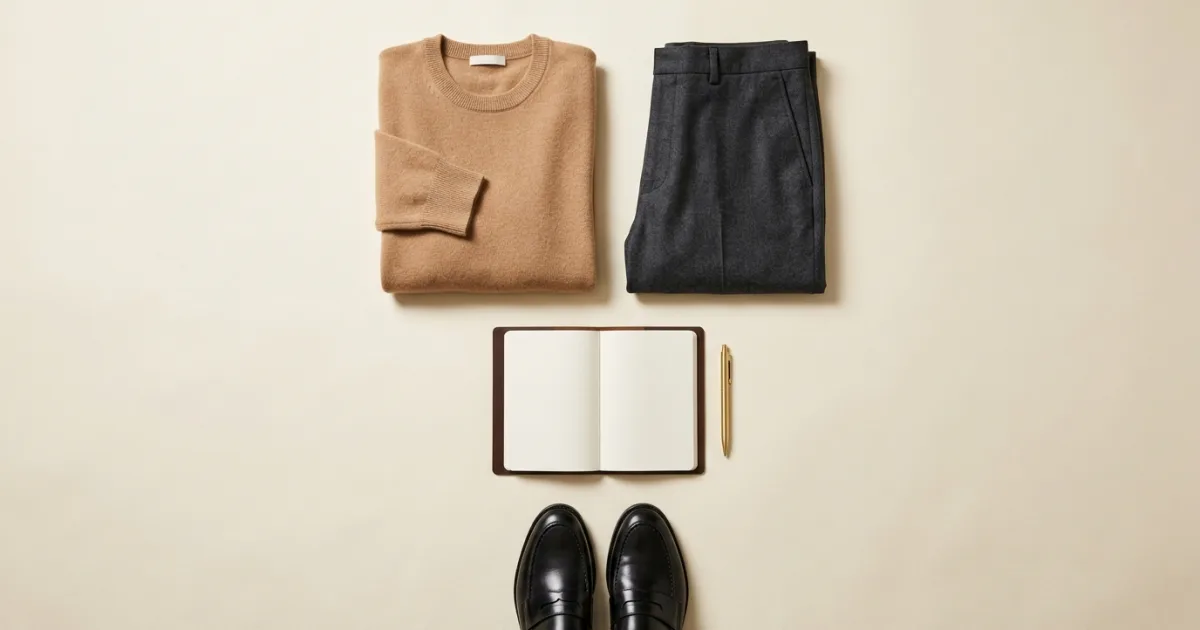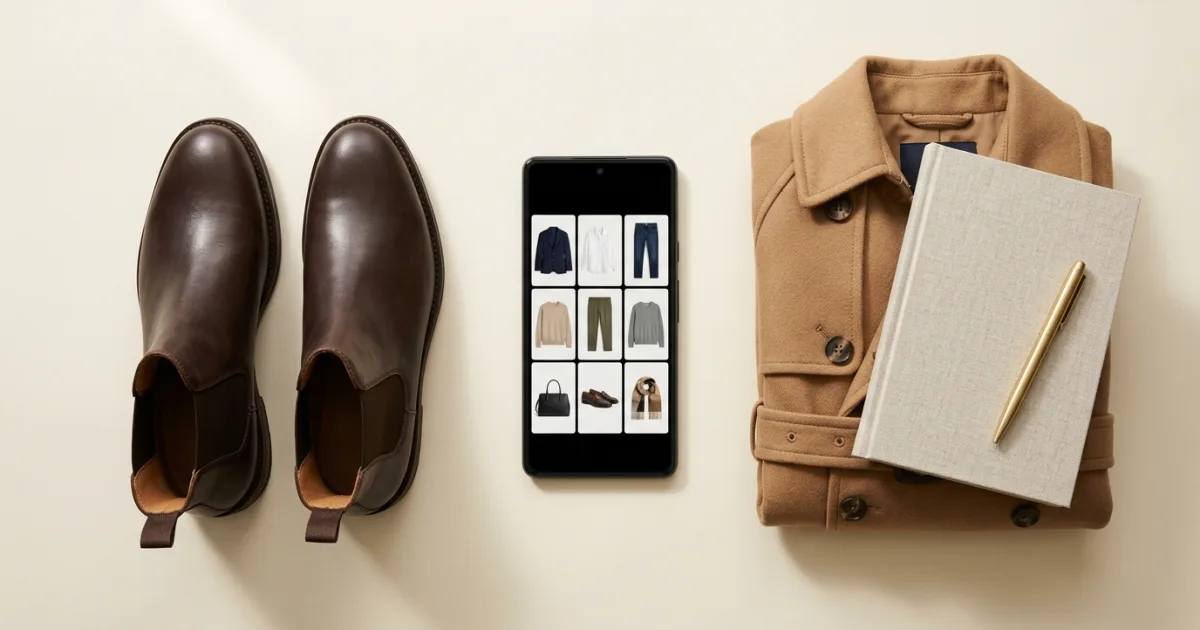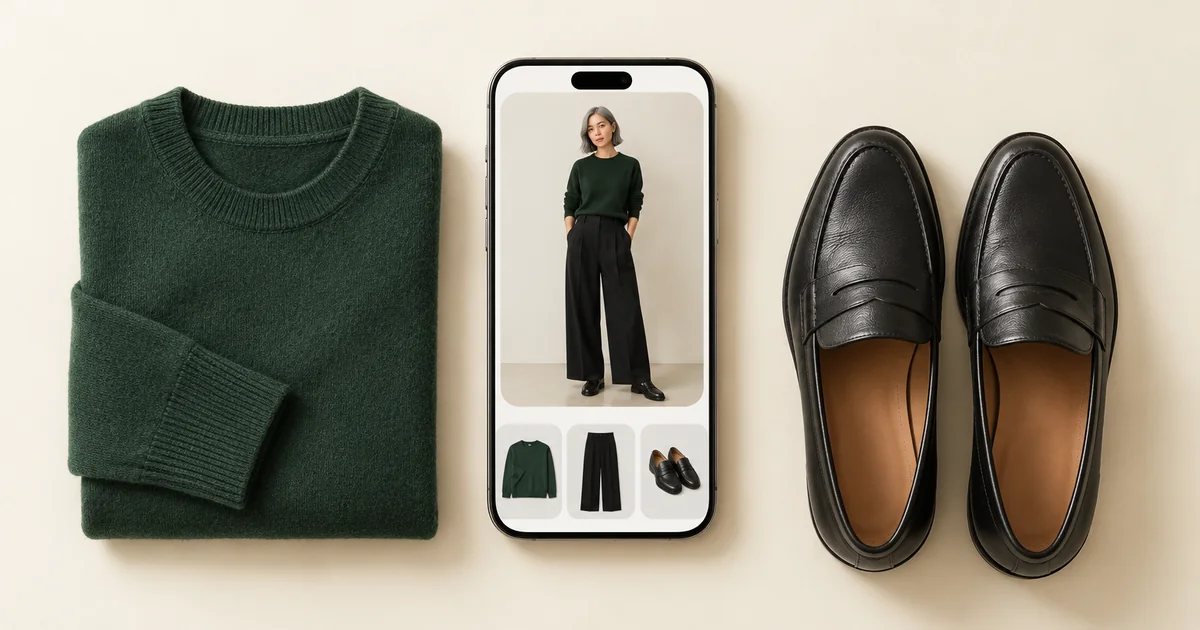

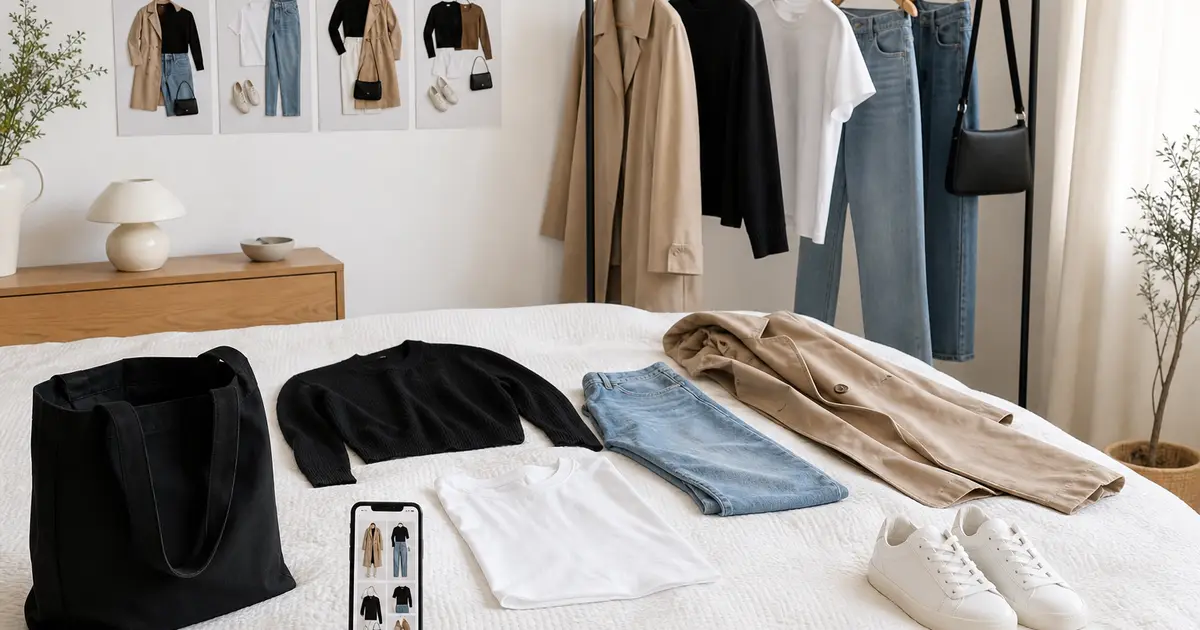
A closet remix challenge turns “shop your own closet” into a specific experiment. For seven days, do not browse for replacements. Instead, choose a small group of familiar clothes, build combinations you have not worn together, and save the ones that work. The goal is not novelty at any cost; it is finding more value in what already fits your life.
Pairings that work on day two are easy to forget by day seven. In Wdrobe, the app we build, you can save each new combination as an outfit and find them again once the challenge ends.
Choose the remix group
Select ten pieces:
- three tops;
- two bottoms;
- two layers;
- two pairs of shoes; and
- one accessory or one-piece garment.
Include seven reliable items and three underused items. Everything should be clean, wearable now, and suitable for the week's weather.
Day 1: repeat a favorite
Wear a formula you already trust. Record why it works: proportion, comfort, color, shoes, or ease. This becomes the baseline rather than something you must avoid repeating.
Day 2: change the silhouette
Keep the same top but switch the bottom and layer. If yesterday was fitted over straight, try a shorter layer over a wider trouser or skirt.
Day 3: use the neglected piece
Build around one underused garment. Pair it with your most familiar shoes and layer so only one variable feels uncertain. If it still fails, note whether the problem is fit, comfort, care, or compatibility.
The hard part of a remix challenge is day four, when the obvious combinations have run out. Get past the obvious ones.
Day 4: reverse the formality
Dress down a polished item with denim or sneakers, or sharpen a casual item with tailoring and a structured shoe. This often creates more useful combinations than changing color alone.
Day 5: borrow a color formula
Use a proven palette from your closet. Navy, white, camel, olive, burgundy, and denim combine easily in many wardrobes. Keep the shapes different from your usual outfit.
Day 6: plan for a real occasion
Make an outfit for an actual upcoming dinner, meeting, trip, or weekend plan. Practical need is a better test than an imaginary event.
Day 7: repeat the best discovery
Wear the strongest new combination again or make one small improvement. Outfit repeating confirms that the discovery is useful.
At the end, keep three saved formulas and write one precise gap, if any. Do not turn mild boredom into a shopping list. For a broader method, see how to shop your closet. If the challenge goes well, No Buy January is the longer version, with the rules written down before day one.
Keep the remix visible
Wdrobe can hold the ten-piece selection and help you compare variations without pulling the closet apart each time. Save the successful outfits so they remain available after the challenge.
If you want to see everything you own in one place, Wdrobe's digital wardrobe builds it from photos of your clothes.
Frequently asked questions
What is a closet remix challenge?
Wearing only clothes you already own for a set period, deliberately creating new combinations rather than repeating defaults. It is a way to find the outfits hiding in a wardrobe you already think you know.
How long should a closet remix challenge last?
Seven to thirty days. A week is enough to break the default rotation; a month starts to reveal which items genuinely do not work rather than which ones you simply forget.
What do you learn from a closet remix?
Which items are doing all the work, which never get chosen, and which gaps genuinely stop outfits. That last list is the only reliable shopping list you can write.
A remix challenge runs out of ideas around day four, usually because the same combinations keep coming to mind. See your clothes laid out and find the pairings you would not have thought of.