
The easiest way to accessorize a basic outfit is to choose one job for the accessories: add color, define shape, change formality, or introduce texture. When every accessory tries to be the statement, the outfit loses a focal point. Start with one useful change, then stop when the look feels complete.
When the job is defining shape, where a belt sits best comes down to your proportions. The body shape analysis in Wdrobe, our styling app, can give waist advice from a head-to-toe photo.
Begin with the outfit's need
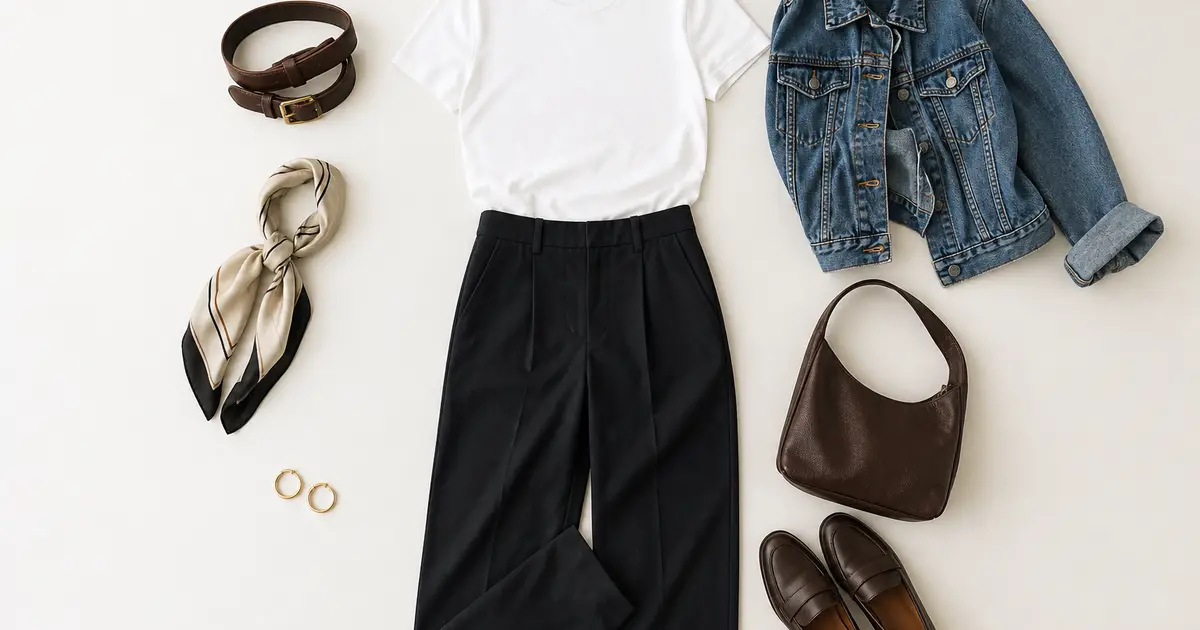
Look at the base from a few steps away. A white tee and dark trousers may need a defined waist, a more polished shoe, a color near the face, or simply a bag appropriate for the day.
Do not add jewelry automatically. The correct accessory may be a belt, scarf, sock, shoe, or nothing.
5 controlled accessory moves
1. Define the waist with a belt
Use a medium-width leather belt in a color related to the shoes or bag. It can give shape to trousers, jeans, a dress, or a blazer without adding visual clutter.
2. Put color near the face
A silk or cotton scarf can introduce Klein blue, burgundy, olive, or print to a neutral outfit. Tie it simply, wear it at the neck, or attach it to a bag, not all three.
3. Change the formality with shoes
White sneakers keep tailoring relaxed; loafers make jeans sharper; a low heel or sleek boot can take a simple column outfit into evening. Shoes often change the outfit more than extra jewelry, and loafers alone can move an outfit from desk to dinner.
Accessories are chosen last and left out of every plan. The belt and the earrings are usually what separates two versions of the same outfit. Get them into the outfit early.
4. Choose one jewelry scale
Small hoops, a single chain, or one substantial cuff can finish a plain neckline. If the earrings are large, keep the necklace quiet or skip it.
5. Add a structured bag
A compact leather or canvas bag gives a soft outfit a clear edge. Match the bag to the activity and what you carry, not a rule that all leather must be the same color.
Use repetition to make it personal
Repeating the same metal, scarf shape, belt width, or bag silhouette creates a signature. Personal style often comes from consistent choices rather than a large accessory collection.
Keep frequently used pieces visible and in good repair. Tarnished hardware, uncomfortable earrings, or a bag that cannot hold essentials will not become useful through better styling. If you cannot remember which belts and scarves you own, it helps to catalog your wardrobe accessories once.
Check the focal point
Take one accessory away before leaving. If the outfit becomes clearer, leave it off. If it feels unfinished, put it back. The goal is not minimalism; it is hierarchy.
Compare small changes
Wdrobe can help you duplicate a basic outfit and test a scarf, belt, bag, or shoe as separate variations.
Continue with a related guide
Accessories do the most work when the clothes stay quiet, which is why monochrome outfits lean on them so heavily.
Want outfits like these from clothes you already own? Wdrobe's AI stylist builds them from your wardrobe and shows each one on your photo.
Frequently asked questions
How do you accessorize a plain outfit?
Add one focal accessory and one supporting piece, a statement necklace with simple earrings, or a bold bag with plain shoes. Two competing focal points is what makes an outfit look overdone.
How many accessories is too many?
Three visible pieces is a reliable ceiling for most outfits, counting bag, jewelry groups and any belt or scarf. Beyond that they compete rather than combine.
What accessories work with everything?
A leather belt, small gold or silver jewelry, and a neutral bag in tan, black or cream. These finish an outfit without needing to be matched to it. If most of your jewelry is silver, the clothes colors that suit silver are the easiest to wear with it.
Accessories are the pieces most likely to be forgotten in a drawer, which is why the same plain outfit keeps going out plain. Make them part of the outfit rather than an afterthought.