
A strong job interview outfit communicates care, role awareness, and ease. It does not need to be a severe black suit. Match the organization's level of formality, choose clean lines, and remove anything that demands adjustment or attention during the conversation.
Formality varies by workplace, and the outfit can often come from your own closet. Wdrobe, which is our app, takes an occasion you type, like “design studio interview”, and suggests outfits from clothes you already own.
Research the workplace, not a stereotype
Look at the company's public team photos, industry, location, and the role itself. Finance, law, hospitality, a creative studio, a laboratory, and a technology startup may expect different levels of formality.
When uncertain, dress one step more polished than the likely everyday standard. For a video interview, apply the same rule to the visible upper half and still wear a complete outfit so you feel prepared.
5 confident interview formulas
1. Navy blazer and cream trousers
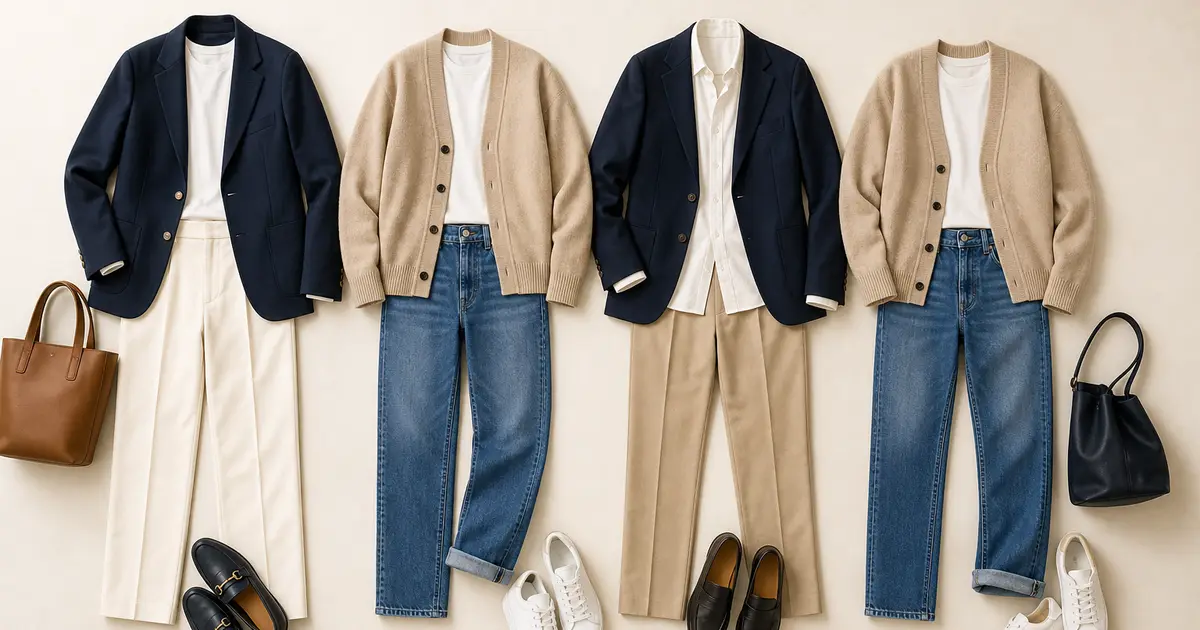
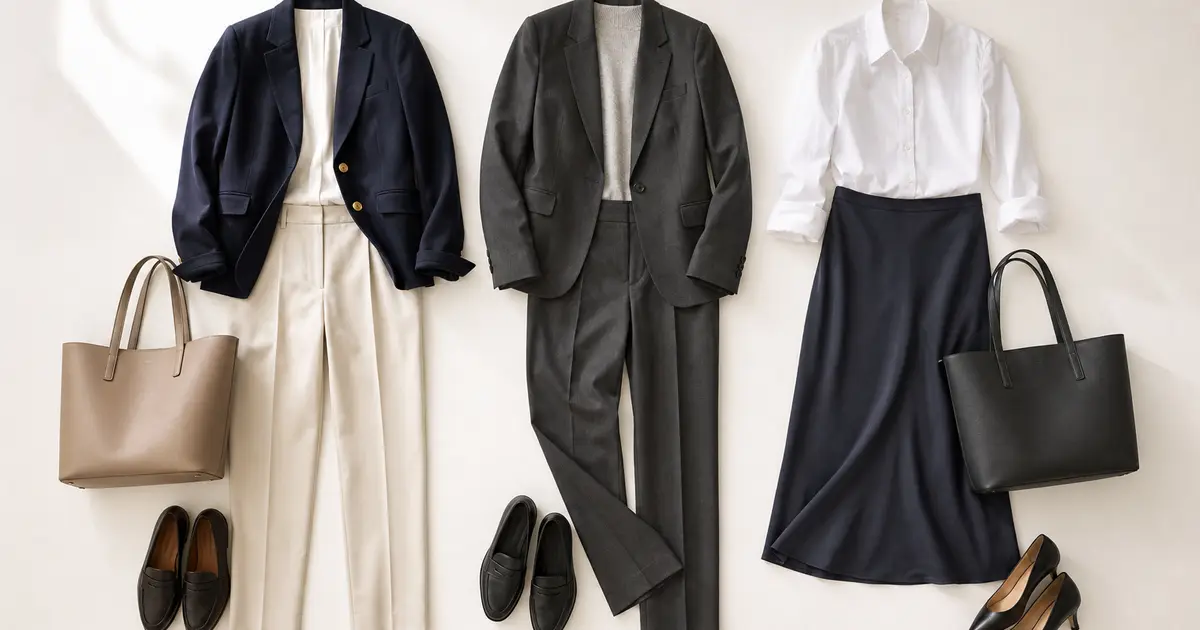
Wear a light shirt or fine knit under a navy blazer with cream, grey, or navy trousers. Loafers or a low closed shoe keep the result professional and approachable. Navy is the safest interview colour because it reads as serious without the severity of black, and it has more partners than most people expect: see what colours go with navy clothes. For more tops to wear with cream trousers, see what to wear with cream pants.
2. Charcoal suit with a knit
A matching charcoal suit becomes less stiff with a fine crewneck or mock-neck knit. Keep the shoe simple and polished. A burgundy, cream or pale blue knit all work under charcoal; the full list is in what colours go with charcoal grey clothes.
3. Midi skirt and crisp shirt
Choose a skirt that remains comfortable when sitting, add a tucked or neatly untucked shirt, and finish with a structured flat or low heel. Sit down in it at home first: a midi skirt that rides up or twists when you sit is the wrong one for a forty-minute conversation.
An interview outfit should be decided days early, not the morning of. Anything you are still unsure about at 8am costs you attention you need elsewhere. Settle it in advance.
4. Polished dress and jacket
A simple knee- or midi-length dress with a cardigan or blazer is an efficient one-color base. Make sure the layer sits cleanly over the sleeves.
5. Smart separates for a creative role
Use tailored trousers, a textured shirt or restrained color, and a clean jacket. One expressive element is enough; the outfit should support your portfolio or conversation rather than compete with it.
Details that affect confidence
Check that the outfit is clean, pressed, and free of loose hems or missing buttons. Sit for ten minutes and make sure the waistband, neckline, and jacket remain comfortable. Choose a bag that holds documents and technology without being overfilled.
Keep fragrance and noisy jewelry restrained. Wear shoes you can walk in if the interview includes a site tour.
Clothing cannot guarantee an interview outcome, and “professional” should not mean hiding identity or conforming to one body type. The practical aim is to remove avoidable distractions and let your preparation lead.
Prepare one backup
Save a second shirt or layer in case of weather, laundry, or a last-minute dress code change. Wdrobe can help you compare the complete formulas before interview day.
Continue with a related guide
Once the job is yours the dress code loosens, and five business-casual formulas cover what comes after.
Want outfits like these from clothes you already own? Wdrobe's AI stylist builds them from your wardrobe and shows each one on your photo.
Frequently asked questions
What should you wear to a job interview?
Dress one level above the office's everyday standard. For most workplaces that means tailored trousers or a skirt with a knit or shirt, and clean closed shoes, in quiet colors.
Should you wear a suit to an interview?
In finance, law and traditional corporate roles, yes. In tech, creative and startup environments a full suit can signal a poor read of the culture, a blazer with simpler pieces is usually better.
What colors are best for an interview?
Navy, grey, black and other quiet tones keep attention on the conversation. One controlled accent color is fine; a bold pattern near your face tends to compete with what you are saying.
The night before an interview is a bad time to discover the blazer has a mark on the sleeve or the trousers only work with shoes that pinch. Put the full outfit together on screen this week, with a backup, so the morning is only getting dressed.